

It was 6pm, and I remember staring at my screen, reading the same sentence over and over without taking it in. My brain had slowed, my decisions felt heavier, and the margin for error felt uncomfortably thin. The patient in front of me deserved clarity, focus, and safe decision-making, but I knew I wasn’t operating at my best.
That’s what burnout looks like in real time. And it should concern us, not just because of what it does to us, but because of what it means for our patients. We don’t talk about that enough.
We talk about resilience, efficiency, and ‘just getting through the day’. But behind closed doors, many GPs are working at a pace and intensity that is simply not safe. I’ve spoken to colleagues who have felt pushed to the brink: overwhelmed, burnt out, and questioning whether they can continue. That isn’t just a few isolated GPs; the data suggests this feeling is widespread across the profession.
In 2022, NHS Practitioner Health carried out a survey of GPs which found that 98% of respondents felt their mental or physical health had been affected by work pressures, and almost half reported thoughts of ending their life either occasionally or frequently.
One anonymous GP wrote: ‘It was difficult to seek help as I did not recognise where I was, too busy trying to help others… I found myself in awe of the doctor that ended their life — “it is one way to stop everything”.’
We need to sit with that. Because this isn’t just about GP wellbeing – it’s about patient safety.
In other safety-critical professions, society recognises that fatigue impairs judgement. We would never expect a pilot to continue flying after hours beyond safe limits, or an HGV driver to keep driving when exhausted.
Yet in general practice, working while cognitively overloaded has become normalised. We continue making complex decisions, absorbing risk, and carrying emotional burden long after our concentration and decision-making have started to decline.
The system has, gradually and persistently, asked us to do more, see more, and carry more. And somewhere along the way, unsafe working has started to feel normal. It isn’t.
Safe working isn’t about rigid rules or targets; it’s a principle. A mindset that says there is a limit to what one clinician can safely do in a day. Recognising that limit is not a failure; it’s a professional responsibility.
One of the most uncomfortable but necessary parts of this is learning to say no.
That might mean no to adding ‘just one more patient,’ no to squeezing in extra work at the end of an already full clinic, or no to systems that rely on goodwill to function. It feels uncomfortable because we care. But consistently saying yes to unsafe workloads doesn’t help anyone; it increases risk for everyone.
In Nottinghamshire, the local medical committee developed a safe working charter to support this shift in thinking. It’s not a prescriptive checklist, but it offers practical ways practices can start to embed safer ways of working. It focuses on two key areas: workload control and practice systems.
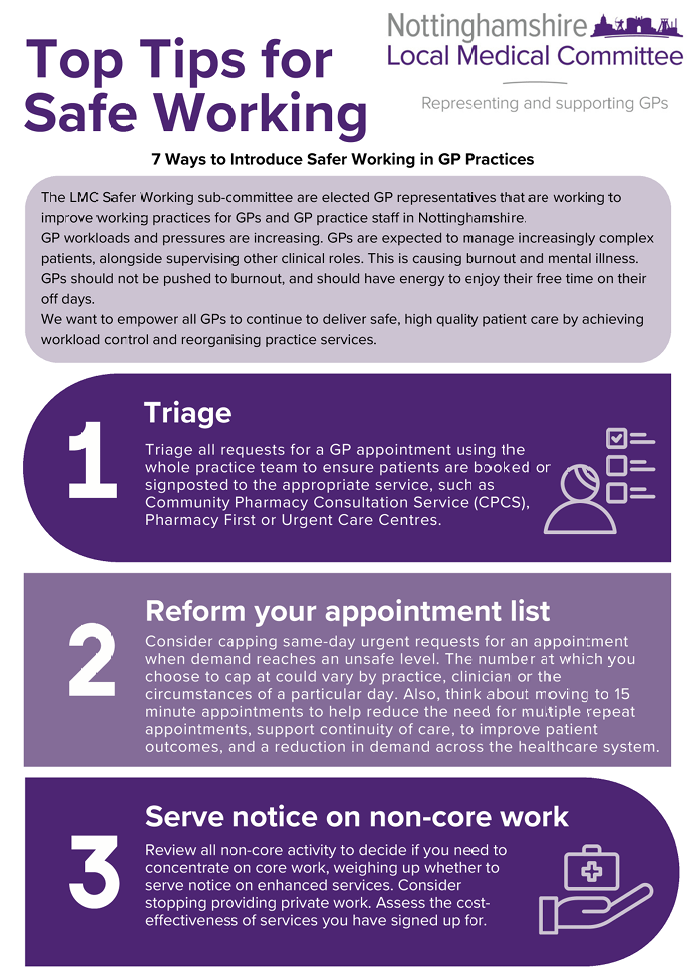
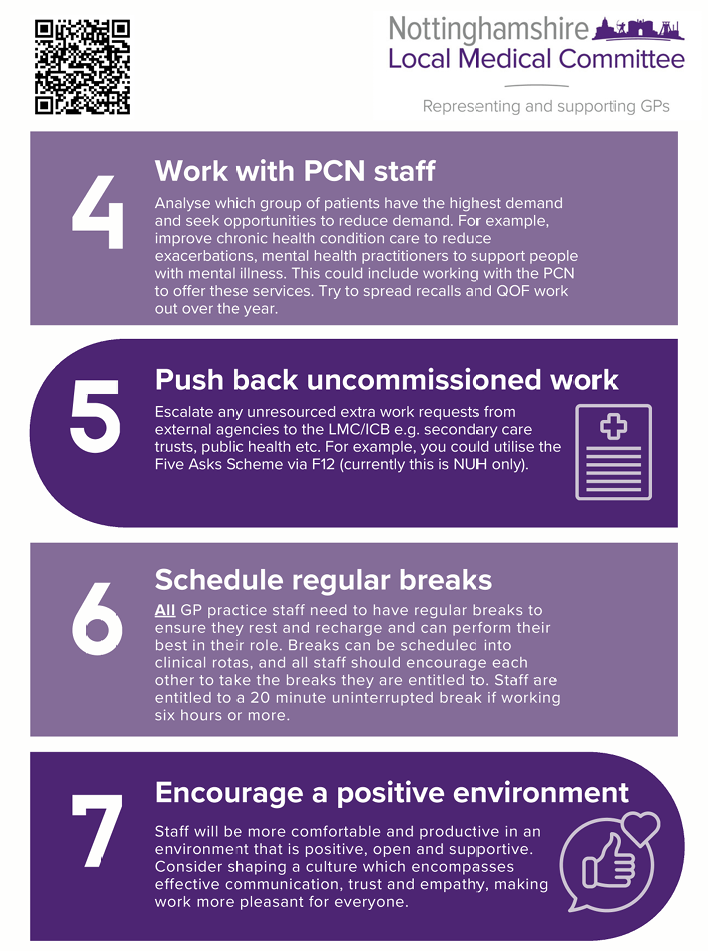
Workload control means being realistic about how many patient contacts can be delivered safely in a day. The UEMO (European Union of General Practitioners) and the BMA recommend a maximum of 25 patient contacts per day per GP, but even that isn’t one-size-fits-all. Complexity matters.
It also means rethinking appointment length. It remains astonishing that we expect GPs to take a history, examine, diagnose, plan, document, and action the plan all within 10 minutes. Moving towards 15-minute appointments isn’t indulgent; it’s safer, more realistic medicine.
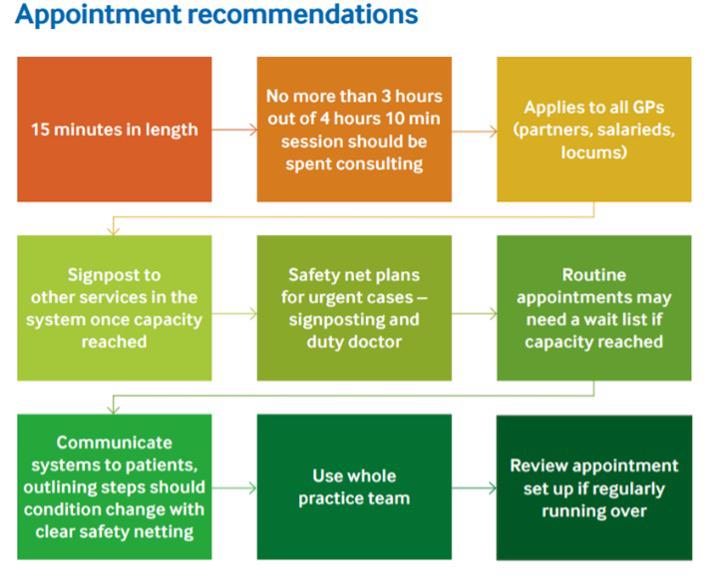
Importantly, research shows that fewer appointments do not reduce patient satisfaction. Patients value being heard and properly managed; rushed care doesn’t deliver that.
The second area, practice systems, looks at how the wider team and processes support safe working. This is particularly relevant for non-contractual work being transferred from secondary care into general practice without resource.
Examples include requests to arrange blood tests, organise investigations, or make onward referrals on behalf of hospital teams. Practices have no contractual obligation to undertake this work. Where appropriate, these requests should be redirected back to the originating provider. The BMA has produced template letters to support practices in doing this consistently and professionally.
Safe working also means recognising that this challenge affects all GPs: partners, salaried GPs, and locums alike. Regardless of contract type, we are all working within the same pressured system and carrying the same responsibility for safe patient care.
Burnout isn’t just about feeling exhausted; it changes how we think, how we decide, and how safely we practise. If we ignore that, we risk normalising a level of care that none of us would accept for our own patients or families. Safe working is how we push back. It’s how we protect not only ourselves, but the people sitting on the other side of the consultation.
The BMA’s wellbeing support services include counselling, peer support, an online burnout assessment tool, and further guidance for doctors struggling with workload and burnout. Further information can be found on the BMA wellbeing hub: Your wellbeing
Jessica Court is a salaried GP in Nottinghamshire. She is also interim chair of Nottinghamshire local medical committee and a BMA sessional GPs committee representative