

‘Your body is made of ice inside
It's hard just to see your heart
Your brain is my favourite place to hide
It's broken in several parts’
Maldito – Alone made of ice
Understanding asexuality and aromanticism
Asexuality means little to no sexual attraction, while aromanticism means little to no romantic attraction. Asexuality and aromanticism are not the same as celibacy or a lack of commitment. They are also not the same as being autistic, and they are not determined by someone’s physical appearance.
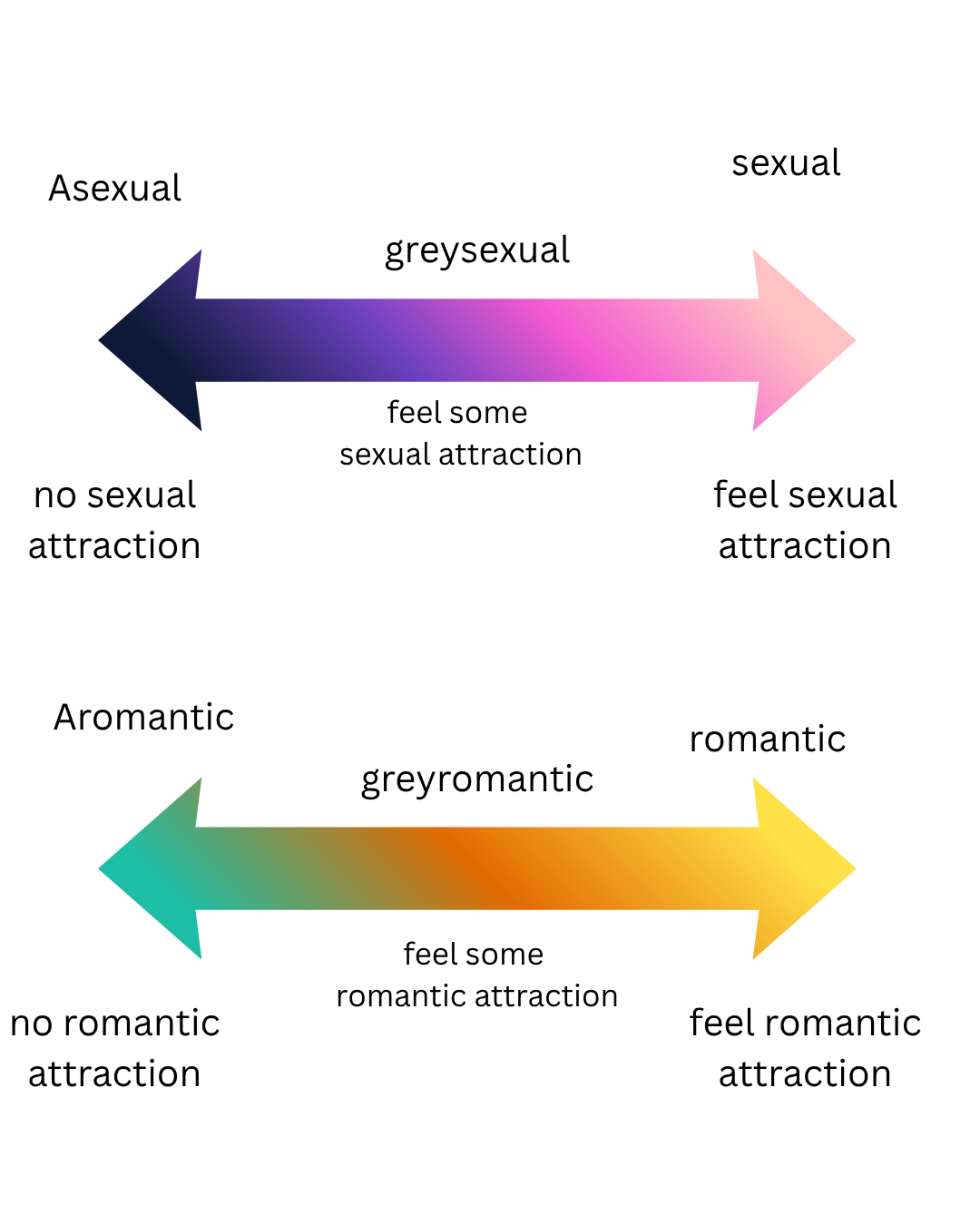
What do sexual or romantic attractions mean? According to AVEN (Asexuality visibility and education network) sexual attraction is the innate or developed desire to engage in sexual activity with a specific person.
It is a deeply personal experience driven by a mix of biological, psychological, and social factors, while romantic attraction is an intense emotional response that sparks the desire to build an intimate, loving, and long-term partnership with a specific person. It often involves a longing for deep connection, physical affection (like cuddling or kissing), and visions of a shared future.
Libido, on the other hand, is the physical desire to feel sexual pleasure, commonly known as a sex drive. It can exist regardless of relationship status, sexual activity or attraction to a specific person.
Asexuals and aromantics usually have libido, and can be sex-averse,
sex-neutral (indifferent to sexual intimacy) or sex-positive (keen to engage/discuss/accepting of sexual intimacy. This includes those that have high libido), or sex ambivalent, as well as romance averse, romance neutral, romance positive, and romance ambivalent.
Both asexuality and aromanticism are huge umbrellas with micro labels made to help people understand themselves and find a community. A few examples:
– Greysexual: feels little sexual attraction, but not non-existent
– Aceflux: the sexual attraction fluctuates
– Cupiosexual: doesn’t feel sexual attraction but desires a sexual relationship
– Caedsexual: feels little to no sexual attraction due to a trauma
– Aegosexual: experiences a disconnect between themselves and the subject of arousal – these people sometimes choose porn for arousal
– Demisexual: only feels sexual attractiveness once they know the person well
The same list of examples exists from a romantic orientation point of view too. Sometimes we’ll choose to simply say we’re aro/ace/aroace rather than share a micro label, but if we share a micro label, it’s to help you understand us better and/or with happiness that we’ve ‘finally found ourselves’, not to confuse you.
To remember that you can have any sexual orientation and be aromantic or have any romantic orientation and be asexual – and of course, any gender identity! It’s also ok to not have always been aromantic or asexual, though most of us were born this way. To us sexual and romantic attraction are fluid.
So how do you pick a partner? Some of us don’t have one! While some of us are married and can have children (via intercourse, IVF, surrogacy etc). To me it’s been a combination of aesthetic, intellectual attraction, safety, mutual understanding, and shared life goals.
Why do asexual and aromantic people need to be included in Pride?
One of the common pushbacks the aro and ace communities get is that we don’t belong in pride, why should we? Pride first of all is for anything that isn’t cishet (cis gendered and heteronormative, heterosexual and heteroromantic orientations), so asexuality and aromanticism fit just right in. Alongside agender people, we make the letter A in LGBTQIA+, though we’re not legally protected by the UK Equality Act 2010.
Asexuality was considered mental illnesses in the DSM until 2013. It was built, alongside aromanticism, from a group of like-minded individuals that were trying to find a place to fit in, to describe what they were (not) feeling = AVEN and AUREA (Aromantic-spectrum Union for Recognition, Education, and Advocacy) in its infancy.
What do the stats say?
The 2021 England and Wales Census included a voluntary question on sexual orientation for the first time, which included an option ‘other sexual orientation’. Of those who selected this option, 28,000 people wrote ‘asexual’ when given the opportunity to write in a response. This amounts to 0.06% of the population, with a relatively consistent geographic spread of responses.
There are only three sets of data published in 2024 and 2025 on asexuality (only reports/studies published so far on this):
Ace in the UK report (experiences of asexual people)
Ace community survey 2024 (US survey focusing on a wide range of gender identities)
Asexuality in the UK (attitudes of members of the public towards ace people)
Key findings include:
– Ace respondents who do come out at work are less likely than all other sexual orientation groups to receive positive responses from their colleagues (17.6% said they experienced ‘only positive’ responses, compared to 40.8% of all respondents)
– 41.8% of ace respondents considered themselves to have mental health issues, most commonly with anxiety or depression. While this is higher than in the general population, it is on par with the wider LGBTQIA+ population
– Asexual people are 10% more likely to be offered or to undergo conversion therapy than other orientations
– A quarter of the general public respondents believe that asexuality is a mental health issue, and one in three believe that it can be cured with therapy. Although the vast majority believe in the ‘existence’ of asexuals, one in 10 do not
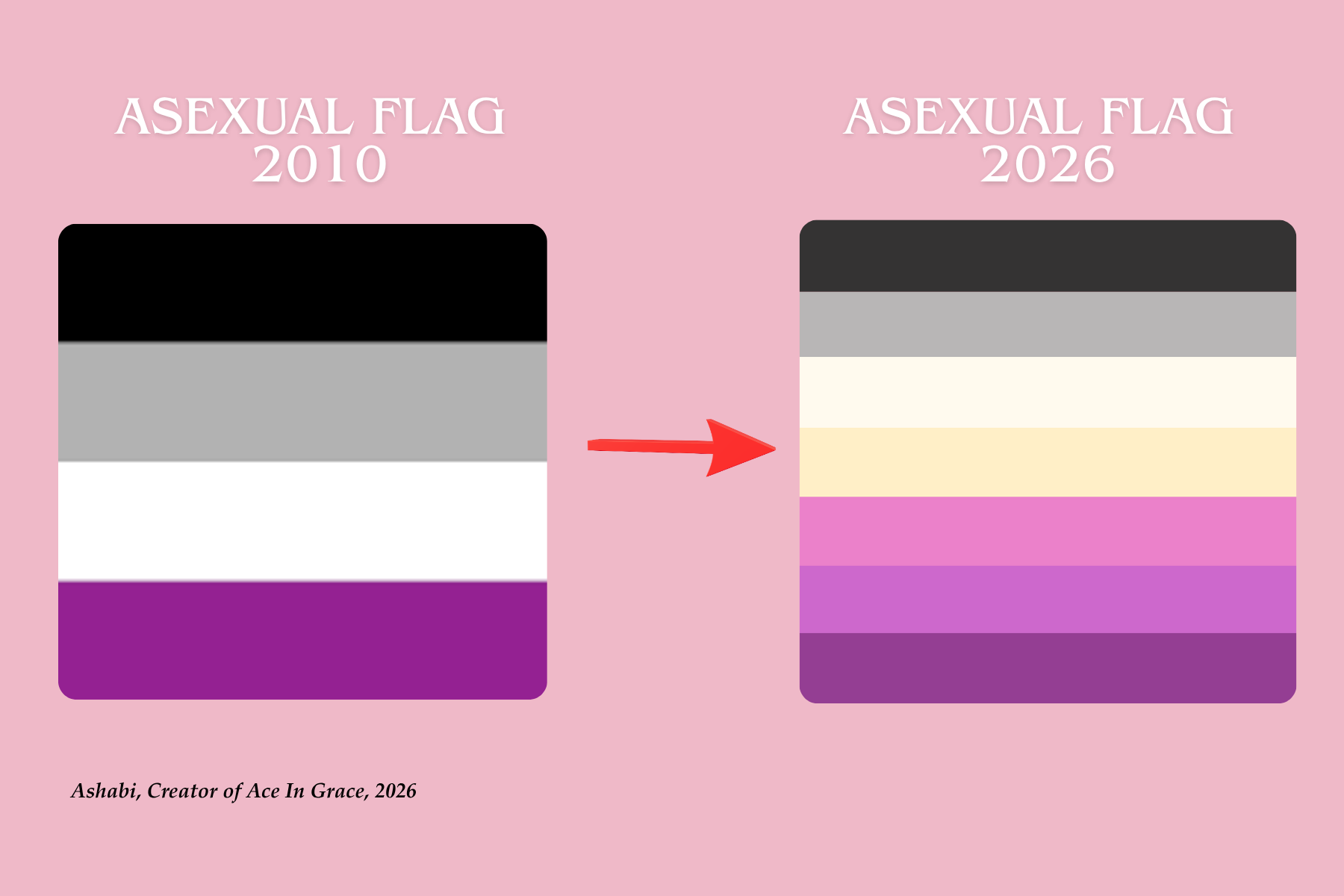
Constantly evolving: a new ace flag made by Ashabi Owagboriaye to help the asexual people of colour feel included. It’s caused huge controversy but is slowly growing on everyone. This is a good example of outstanding activism that we can all learn from.
When it comes to aromanticism, AUREA has published only one census report so far, conducted in 2020. The sample size was limited, with a responding population aged predominantly 16-25, but this only highlights how new this orientation is and the lack of awareness among older populations.
When asked about discrimination, 82.43% reported not being taken seriously, being ignored, or being dismissed by others. Almost half indicated they were subject to attempts or suggestions to be ‘fixed’ or ‘cured’. Over 20% suffered exclusion, verbal and online harassment.
Pride should ensure aro and ace people are not just recognised, but believed, included and made to feel that they belong.
Cristina Costache (she/her) is an outgoing national council representative and council representative to the patient liaison group’s aroaceness